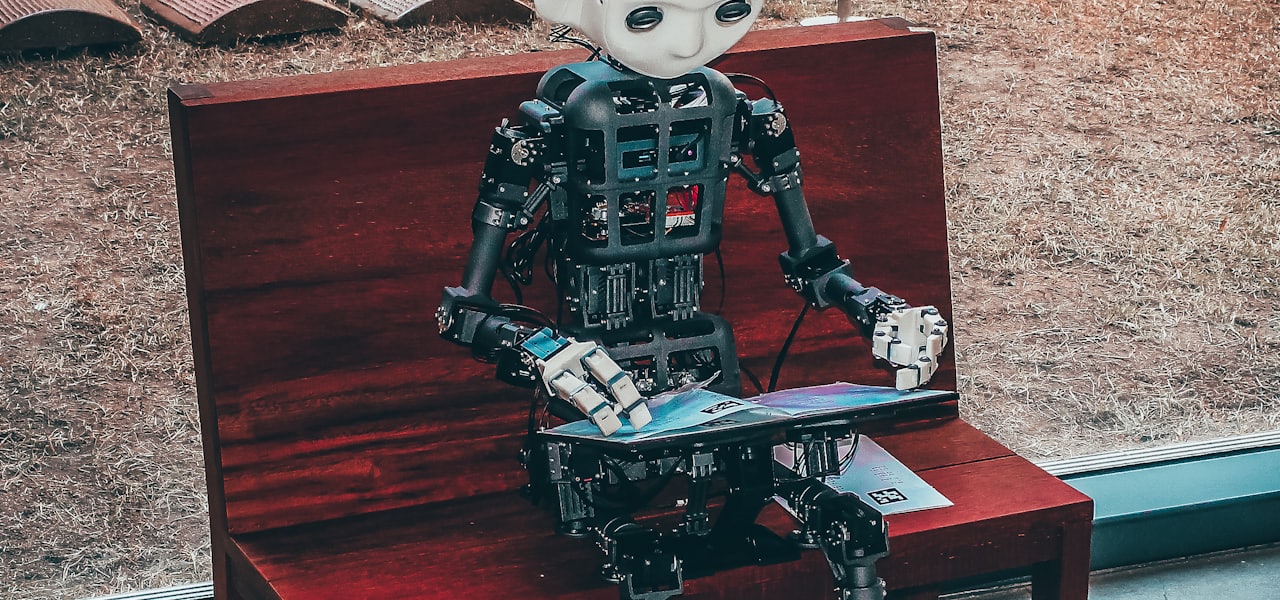
Inductive programming (IP) is a special area of automatic programming, covering research from artificial intelligence and programming, which addresses learning of typically declarative (logic or functional) and often recursive programs from incomplete specifications, such as input/output examples or constraints. Depending on the programming language used, there are several kinds of inductive programming. Inductive functional programming, which uses functional programming languages such as Lisp or Haskell, and most especially inductive logic programming, which uses logic programming languages such as Prolog and other logical representations such as description logics, have been more prominent, but other (programming) language paradigms have also been used, such as constraint programming or probabilistic programming. == Definition == Inductive programming incorporates all approaches which are concerned with learning programs or algorithms from incomplete (formal) specifications. Possible inputs in an IP system are a set of training inputs and corresponding outputs or an output evaluation function, describing the desired behavior of the intended program, traces or action sequences which describe the process of calculating specific outputs, constraints for the program to be induced concerning its time efficiency or its complexity, various kinds of background knowledge such as standard data types, predefined functions to be used, program schemes or templates describing the data flow of the intended program, heuristics for guiding the search for a solution or other biases. Output of an IP system is a program in some arbitrary programming language containing conditionals and loop or recursive control structures, or any other kind of Turing-complete representation language. In many applications the output program must be correct with respect to the examples and partial specification, and this leads to the consideration of inductive programming as a special area inside automatic programming or program synthesis, usually opposed to 'deductive' program synthesis, where the specification is usually complete. In other cases, inductive programming is seen as a more general area where any declarative programming or representation language can be used and we may even have some degree of error in the examples, as in general machine learning, the more specific area of structure mining or the area of symbolic artificial intelligence. A distinctive feature is the number of examples or partial specification needed. Typically, inductive programming techniques can learn from just a few examples. The diversity of inductive programming usually comes from the applications and the languages that are used: apart from logic programming and functional programming, other programming paradigms and representation languages have been used or suggested in inductive programming, such as functional logic programming, constraint programming, probabilistic programming, abductive logic programming, modal logic, action languages, agent languages and many types of imperative languages. == History == The early works of Plotkin, and his "relative least general generalization (rlgg)", had an enormous impact in inductive logic programming. There were some encouraging results on learning recursive Prolog programs such as quicksort from examples together with suitable background knowledge, for example with GOLEM. However, after initial success, the community got disappointed by limited progress about the induction of recursive programs with ILP less and less focusing on recursive programs and leaning more and more towards a machine learning setting with applications in relational data mining and knowledge discovery. In parallel to work in ILP, Koza proposed genetic programming in the early 1990s as a generate-and-test based approach to learning programs. The idea of genetic programming was further developed into the inductive programming system ADATE and the systematic-search-based system MagicHaskeller. Here again, functional programs are learned from sets of positive examples together with an output evaluation (fitness) function which specifies the desired input/output behavior of the program to be learned. The early work in grammar induction (also known as grammatical inference) is related to inductive programming, as rewriting systems or logic programs can be used to represent production rules. In fact, early works in inductive inference considered grammar induction and Lisp program inference as basically the same problem. The results in terms of learnability were related to classical concepts, such as identification-in-the-limit, as introduced in the seminal work of Gold. More recently, the language learning problem was addressed by the inductive programming community. In the recent years, the classical approaches have been resumed and advanced with great success. Therefore, the synthesis problem has been reformulated on the background of constructor-based term rewriting systems taking into account modern techniques of functional programming, as well as moderate use of search-based strategies and usage of background knowledge as well as automatic invention of subprograms. Many new and successful applications have recently appeared beyond program synthesis, most especially in the area of data manipulation, programming by example and cognitive modelling (see below). Other ideas have also been explored with the common characteristic of using declarative languages for the representation of hypotheses. For instance, the use of higher-order features, schemes or structured distances have been advocated for a better handling of recursive data types and structures; abstraction has also been explored as a more powerful approach to cumulative learning and function invention. One powerful paradigm that has been recently used for the representation of hypotheses in inductive programming (generally in the form of generative models) is probabilistic programming (and related paradigms, such as stochastic logic programs and Bayesian logic programming). == Application areas == The first workshop on Approaches and Applications of Inductive Programming (AAIP) Archived 2016-03-03 at the Wayback Machine held in conjunction with ICML 2005 identified all applications where "learning of programs or recursive rules are called for, [...] first in the domain of software engineering where structural learning, software assistants and software agents can help to relieve programmers from routine tasks, give programming support for end users, or support of novice programmers and programming tutor systems. Further areas of application are language learning, learning recursive control rules for AI-planning, learning recursive concepts in web-mining or for data-format transformations". Since then, these and many other areas have shown to be successful application niches for inductive programming, such as end-user programming, the related areas of programming by example and programming by demonstration, and intelligent tutoring systems. Other areas where inductive inference has been recently applied are knowledge acquisition, artificial general intelligence, reinforcement learning and theory evaluation, and cognitive science in general. There may also be prospective applications in intelligent agents, games, robotics, personalisation, ambient intelligence and human interfaces.
DigitaltMuseum
DigitaltMuseum (lit. 'The Digital Museum') is a website database in Norwegian and Swedish for art, images and cultural history museums. The service was established in 2009 after a trial period. The database is developed and operated by KulturIT. KulturIT ANS was established by the Norwegian Museum of Cultural History and Maihaugen in consultation with the Norwegian Archive, Library and Museum Authority (ABM) in 2007. In 2015, the company underwent a corporate transformation and KulturIT AS was established on 12 February. The website has per 2025 around 2,548,022 images. Many of the images are in the public domain or under Creative Commons licenses and are being imported into Wikimedia Commons. The website's API was developed in 2012. == Institutions == As of 2025, there are 223 collaborating museums. == Mission == DigitaltMuseum aims to make the museums' collections accessible to all interested parties, regardless of time and place. The website aims to facilitate easy use of the collections through various methods including image searches, research, teaching and joint knowledge development. DigitaltMuseum contains collections from several hundred Norwegian and Swedish museums, totalling around five million objects. The website contains both historical images from the areas and themes covered by the museums, as well as images of artefacts from the collections. Parts of the collection have previously only been shown in the museums' exhibitions and books and have therefore rarely or never been shown to the public.
Matchbox Educable Noughts and Crosses Engine
The Matchbox Educable Noughts and Crosses Engine (sometimes called the Machine Educable Noughts and Crosses Engine or MENACE) was a mechanical computer made from 304 matchboxes designed and built by artificial intelligence researcher Donald Michie and his colleague Roger Chambers, in 1961. It was designed to play human opponents in games of noughts and crosses (tic-tac-toe) by returning a move for any given state of play and to refine its strategy through reinforcement learning. This was one of the first types of artificial intelligence. Michie and Chambers did not have immediate access to a computer; they worked around this by building the engine out of matchboxes. The matchboxes they used each represented a single possible layout of a noughts and crosses grid. When the computer first played, it would randomly choose moves based on the current layout. As it played more games, through a reinforcement loop, it disqualified strategies that led to losing games, and supplemented strategies that led to winning games. Michie held a tournament against MENACE in 1961, wherein he experimented with different openings. Following MENACE's maiden tournament against Michie, it demonstrated successful artificial intelligence in its strategy. Michie's essays on MENACE's weight initialisation and the BOXES algorithm used by MENACE became popular in the field of computer science research. Michie was honoured for his contribution to machine learning research, and was twice commissioned to program a MENACE simulation on an actual computer. == Origin == Donald Michie (1923–2007) had been on the team decrypting the German Tunny Code during World War II. Fifteen years later, he wanted to further display his mathematical and computational prowess with an early convolutional neural network. Since computer equipment was not obtainable for such uses, and Michie did not have a computer readily available, he decided to display and demonstrate artificial intelligence in a more esoteric format and constructed a functional mechanical computer out of matchboxes and beads. MENACE was constructed as the result of a bet with a computer science colleague who postulated that such a machine was impossible. Michie undertook the task of collecting and defining each matchbox as a "fun project", later turned into a demonstration tool. Michie completed his essay on MENACE in 1963, "Experiments on the mechanization of game-learning", as well as his essay on the BOXES Algorithm, written with R. A. Chambers and had built up an AI research unit in Hope Park Square, Edinburgh, Scotland. MENACE learned by playing successive matches of noughts and crosses. Each time, it would eliminate a losing strategy by the human player confiscating the beads that corresponded to each move. It reinforced winning strategies by making the moves more likely, by supplying extra beads. This was one of the earliest versions of the Reinforcement Loop, the schematic algorithm of looping the algorithm, dropping unsuccessful strategies until only the winning ones remain. This model starts as completely random, and gradually learns. == Composition == MENACE was made from 304 matchboxes glued together in an arrangement similar to a chest of drawers. Each box had a code number, which was keyed into a chart. This chart had drawings of tic-tac-toe game grids with various configurations of X, O, and empty squares, corresponding to all possible permutations a game could go through as it progressed. After removing duplicate arrangements (ones that were simply rotations or mirror images of other configurations), MENACE used 304 permutations in its chart and thus that many matchboxes. Each individual matchbox tray contained a collection of coloured beads. Each colour represented a move on a square on the game grid, and so matchboxes with arrangements where positions on the grid were already taken would not have beads for that position. Additionally, at the front of the tray were two extra pieces of card in a "V" shape, the point of the "V" pointing at the front of the matchbox. Michie and his artificial intelligence team called MENACE's algorithm "Boxes", after the apparatus used for the machine. The first stage "Boxes" operated in five phases, each setting a definition and a precedent for the rules of the algorithm in relation to the game. == Operation == MENACE played first, as O, since all matchboxes represented permutations only relevant to the "X" player. To retrieve MENACE's choice of move, the opponent or operator located the matchbox that matched the current game state, or a rotation or mirror image of it. For example, at the start of a game, this would be the matchbox for an empty grid. The tray would be removed and lightly shaken so as to move the beads around. Then, the bead that had rolled into the point of the "V" shape at the front of the tray was the move MENACE had chosen to make. Its colour was then used as the position to play on, and, after accounting for any rotations or flips needed based on the chosen matchbox configuration's relation to the current grid, the O would be placed on that square. Then the player performed their move, the new state was located, a new move selected, and so on, until the game was finished. When the game had finished, the human player observed the game's outcome. As a game was played, each matchbox that was used for MENACE's turn had its tray returned to it ajar, and the bead used kept aside, so that MENACE's choice of moves and the game states they belonged to were recorded. Michie described his reinforcement system with "reward" and "punishment". Once the game was finished, if MENACE had won, it would then receive a "reward" for its victory. The removed beads showed the sequence of the winning moves. These were returned to their respective trays, easily identifiable since they were slightly open, as well as three bonus beads of the same colour. In this way, in future games MENACE would become more likely to repeat those winning moves, reinforcing winning strategies. If it lost, the removed beads were not returned, "punishing" MENACE, and meaning that in future it would be less likely, and eventually incapable if that colour of bead became absent, to repeat the moves that cause a loss. If the game was a draw, one additional bead was added to each box. == Results in practice == === Optimal strategy === Noughts and crosses has a well-known optimal strategy. A player must place their symbol in a way that blocks the other player from achieving any rows while simultaneously making a row themself. However, if both players use this strategy, the game always ends in a draw. If the human player is familiar with the optimal strategy, and MENACE can quickly learn it, then the games will eventually only end in draws. The likelihood of the computer winning increases quickly when the computer plays against a random-playing opponent. When playing against a player using optimal strategy, the odds of a draw grow to 100%. In Donald Michie's official tournament against MENACE in 1961 he used optimal strategy, and he and the computer began to draw consistently after twenty games. Michie's tournament had the following milestones: Michie began by consistently opening with "Variant 0", the middle square. At 15 games, MENACE abandoned all non-corner openings. At just over 20, Michie switched to consistently using "Variant 1", the bottom-right square. At 60, he returned to Variant 0. As he neared 80 games, he moved to "Variant 2", the top-middle. At 110, he switched to "Variant 3", the top right. At 135, he switched to "Variant 4", middle-right. At 190, he returned to Variant 1, and at 210, he returned to Variant 0. The trend in changes of beads in the "2" boxes runs: === Correlation === Depending on the strategy employed by the human player, MENACE produces a different trend on scatter graphs of wins. Using a random turn from the human player results in an almost-perfect positive trend. Playing the optimal strategy returns a slightly slower increase. The reinforcement does not create a perfect standard of wins; the algorithm will draw random uncertain conclusions each time. After the j-th round, the correlation of near-perfect play runs: 1 − D D − D ( j + 2 ) ∑ i = 0 j D ( j i + 1 ) V i {\displaystyle {1-D \over D-D^{(j+2)}}\sum _{i=0}^{j}D^{(ji+1)}V_{i}} Where Vi is the outcome (+1 is win, 0 is draw and -1 is loss) and D is the decay factor (average of past values of wins and losses). Below, Mn is the multiplier for the n-th round of the game. == Legacy == Donald Michie's MENACE proved that a computer could learn from failure and success to become good at a task. It used what would become core principles within the field of machine learning before they had been properly theorised. For example, the combination of how MENACE starts with equal numbers of types of beads in each matchbox, and how these are then selected at random, creates a learning behaviour similar to weight initialisation
Biohybrid system
Biohybrid systems refer to the integration of biological materials, such as cells or tissues, with artificial components, including electronics or mechanical structure. This combination incorporates the capabilities of living organisms with the precision of man-made technology. As a result, these systems perform tasks that neither biology nor machines could achieve independently. Biohybrid systems might use lab-cultured muscle cells to power small robots or combine sensors with living tissue for better health sensing. The intent behind these systems is to combine the benefits of biological and technological components to introduce new solutions for complex medical challenges. Biohybrid systems may have transformative potential across sectors, such as robotics to create actuators and sensors that mimic natural muscle and nerve function, medicine in developing smart implants and drug delivery systems, in prosthetics for enhancing user control through neural or muscular interfaces and environmental sustainability for deploying biohybrid solutions for pollution sensing or remediation. == Origin == The term "biohybrid" is a compound of "bio" from biology (meaning life) and "hybrid" (referring to a combination of distinct elements), denoting a field of study. Its use helps distinguish such systems from purely biological constructs or entirely synthetic machines. Early academic mentions may include bio actuated robotics papers and foundational tissue-robot integration studies published in journals like Nature Biotechnology or Science Robotics. The emergence of the term reflects a growing recognition of the need to describe systems that do not fit cleanly into traditional categories. == Design principles == One of the most significant biohybrid challenges is to engineer interfaces between living tissue and artificial materials that are efficient. This means having precise control over adhesion at the surface, diffusion of nutrients, and signal conduction. Actuation mechanisms within the heart of these systems generate movement or mechanical response. These may be in the form of living muscle cells such as skeletal myocytes or cardiomyocytes, soft pneumatic actuators, or electrical stimulation-responsive tissues. Materials selection is equally critical. Hydrogels, elastomers like PDMS (polydimethylsiloxane), and biopolymers are commonly used due to their softness and biocompatibility. These materials must support cell viability, resist immune attack, and allow the integration of mechanical or electrical components. == Key components == At their core, biohybrid systems work by bridging living biological parts with technology. Through this integration, functionality that neither system could accomplish singularly is possible. Biological parts may be cells, tissues, or even organs—occasionally cultured in a laboratory setting. These biological parts carry out biologically inspired behaviors, such as muscle contraction or chemical sensing in the body. Technological components may constitute devices like sensors, electronic components, and mechanical structure. These manipulate the system, supply power, or transfer data. An example is a sensor that is implantable within a body and detects glucose levels as it sends information to a smart phone. By integrating these artificial and biological parts, biohybrid systems can perform advanced functions, such as tissue regeneration, real-time health monitoring, or the recovery of motor function in paralysis patients. Biohybrid systems generally consist of two major components: the biological and the mechanical. Biological components may include muscle cells for contraction, endothelial cells for vascularization, and stem cells for regenerative capabilities. Mechanical components comprise soft actuators that mimic organic motion, synthetic scaffolds that provide support and structure, and microfluidic systems that facilitate the delivery of nutrients and removal of waste. These components are combined in a manner that allows for dynamic, lifelike behavior—such as the contraction of tissue or the propagation of mechanical waves—while maintaining biocompatibility and durability. == Applications == The range of applications for biohybrid systems is broad and continuously expanding. In robotics, biohybrid structures have been used to engineer microscopic, muscle-driven machines, such as Harvard University's biohybrid stingray robot. In medical applications, they offer new alternatives for organ repair and augmentation, including biohybrid heart valves and esophageal scaffolds. Biohybrids are also promising in neural interfaces, where the goal is to create long-lasting, stable interaction between mechanical devices and brain tissue. Muscle-actuated drug response platforms are under exploration in pharmacology for modelling and real-time screening. == Examples == Several high-profile research projects have demonstrated the potential of biohybrid systems: Harvard researchers developed a biohybrid swimming ray powered by rat cardiac cells layered onto a gold skeleton, mimicking the motion of a real stingray. At the Massachusetts Institute of Technology, a cardiac pump actuated entirely by living heart muscle cells was engineered to simulate the behavior of a beating heart. Bio actuated soft robots have been built to simulate gut peristalsis, using muscle contractions to replicate natural wave-like movement in the digestive tract. == Challenges and limitations == As with many technologies that involve living systems, biohybrid systems raise important ethical and biomedical questions. Cell sourcing remains a key issue, particularly when embryonic or animal-derived cells are used. Long-term viability is another concern—living tissues must be kept alive with nutrients and oxygen, and they often degrade or elicit immune responses when implanted. Powering these biological parts presents logistical and ethical hurdles as well. Systems must either include internal mechanisms for nutrient delivery or be supported externally, which can limit portability and independence. == Future directions == Researchers are exploring self-directed, self-regulated organ substitutes and regenerative implants that can respond to their surroundings in real-time. These systems may be integrated with artificial intelligence to make them adjust to stimuli and coordinate complex behaviors. Future potential applications are wearable biohybrid systems for rehabilitation, space medicine devices for long-duration missions, and implantable devices that integrate into human physiology.
AIOps
AIOps (Artificial Intelligence for IT Operations) refers to the use of artificial intelligence, machine learning, and big data analytics to automate and enhance data center management. It helps organizations manage complex IT environments by detecting, diagnosing, and resolving issues more efficiently than traditional methods. == History == AIOps was first defined by Gartner in 2016, combining "artificial intelligence" and "IT operations" to describe the application of AI and machine learning to enhance IT operations. This concept was introduced to address the increasing complexity and data volume in IT environments, aiming to automate processes such as event correlation, anomaly detection, and causality determination. == Definition == AIOps refers to multi-layered, complex technology platforms that enhance and automate IT operations by using machine learning and analytics to analyze the large amounts of data collected from various DevOps devices and tools, automatically identifying and responding to issues in real-time. AIOps represents a shift from isolated IT data to aggregated observational data (e.g., job logs and monitoring systems) and interaction data (such as ticketing, events, or incident records) within a big data platform. AIOps applies machine learning and analytics to this data, resulting in continuous visibility that, when combined with automation, can lead to ongoing improvements. AIOps connects three IT disciplines (automation, service management, and performance management) to achieve continuous visibility and improvement. This new approach in modern, accelerated, and hyper-scaled IT environments leverages advances in machine learning and big data to overcome previous limitations. == Components == AIOps includes, but is not limited to, the following processes and techniques: Anomaly Detection Log Analysis Root Cause Analysis Cohort Analysis Event Correlation Predictive Analytics Hardware Failure Prediction Automated Remediation Performance Prediction Incident Management Causality Determination Queue Management Resource Scheduling and Optimization Predictive Capacity Management Resource Allocation Service Quality Monitoring Deployment and Integration Testing System Configuration Auto-diagnosis and Problem Localization Efficient ML Training and Inferencing Using LLMs for Cloud Ops Auto Service Healing Data Center Management Customer Support Security and Privacy in Cloud Operations == Comparison with DevOps == AIOps is increasingly compared with DevOps in terms of impact on operational efficiency. While DevOps focuses on collaboration between development and operations teams to accelerate software delivery, AIOps integrates artificial intelligence to enhance monitoring, automation, and predictive capabilities. Various industry analyses have explored the similarities and differences between the two approaches, including discussions on how organizations can combine them to improve incident management and resource optimization. == Results == AI optimizes IT operations in five ways: First, intelligent monitoring powered by AI helps identify potential issues before they cause outages, improving metrics like Mean Time to Detect (MTTD) by 15-20%. Second, performance data analysis and insights enable quick decision-making by ingesting and analyzing large data sets in real time. Third, AI-driven automated infrastructure optimization efficiently allocates resources and thereby reducing cloud costs. Fourth, enhanced IT service management reduces critical incidents by over 50% through AI-driven end-to-end service management. Lastly, intelligent task automation accelerates problem resolution and automates remedial actions with minimal human intervention. In 2025, Atera Networks was identified as a leader in AIOps by the software review platform G2. == AIOps vs. MLOps == AIOps tools use big data analytics, machine learning algorithms, and predictive analytics to detect anomalies, correlate events, and provide proactive insights. This automation reduces the burden on IT teams, allowing them to focus on strategic tasks rather than routine operational issues. AIOps is widely used by IT operations teams, DevOps, network administrators, and IT service management (ITSM) teams to enhance visibility and enable quicker incident resolution in hybrid cloud environments, data centers, and other IT infrastructures. In contrast to MLOps (Machine Learning Operations), which focuses on the lifecycle management and operational aspects of machine learning models, AIOps focuses on optimizing IT operations using a variety of analytics and AI-driven techniques. While both disciplines rely on AI and data-driven methods, AIOps primarily targets IT operations, whereas MLOps is concerned with the deployment, monitoring, and maintenance of ML models. == Conferences == There are several conferences that are specific to AIOps: AIOps Summit AI Dev Summit IBM Think conference
Webull
Webull Corporation, often stylized as simply Webull, is a U.S.-based financial services holding company headquartered in St. Petersburg, Florida. It owns and operates the Webull electronic trading platform for self-directed retail investors. Depending on jurisdiction, the Webull platform offers trading in stocks, exchange-traded funds (ETFs), options, margin, bonds, cryptocurrency and futures, as well as market-data tools. Webull began operations in 2016 under Hunan Fumi Information Technology, a China-based financial technology company founded by Wang Anquan. It launched U.S. brokerage services through Webull Financial LLC in 2018 and expanded during the retail-trading boom of 2020 and 2021. In April 2025, Webull became a publicly traded company on the Nasdaq through a merger with special-purpose acquisition company SK Growth Opportunities Corporation. The company's U.S. brokerage revenue relies substantially on payment for order flow, with options trading accounting for the larger share of its order-flow rebates in 2025. Webull has faced regulatory actions related to options customer approvals, complaint handling, suspicious activity reporting, social-media marketing and customer disclosures. It has also faced scrutiny from U.S. lawmakers and state officials over its historical and operational ties to China and the handling of U.S. customer data. == History == === Founding === Webull was founded in 2016 under Hunan Fumi Information Technology, a China-based financial technology company, by Wang Anquan, a former employee of Alibaba Group and Xiaomi. Hunan Fumi Information Technology received backing from Xiaomi, Shunwei Capital, and other investors in China. Fumi Technology was a Hunan-based fintech start-up incubated by Xiaomi and raised about CNY200 million (approximately US$30 million) in a Series B financing round in 2018. On May 24, 2017, Webull Financial LLC was established as a Delaware limited liability company. It began offering brokerage services in the United States in May 2018. Wang hired Anthony Denier as CEO of the U.S. brokerage that year and the two mapped out their strategy on napkins at a Mexican restaurant in New York City. Webull Corporation was incorporated in the Cayman Islands in September 2019 as the group's holding company. === Retail trading boom === In May 2020, the company received SEC approval to launch a robo-advisor on its platform. By August 2020, the platform had over 11 million registered users, and in October 2020, it had 750,000 daily active users. Webull introduced options trading in 2020 and later added cryptocurrency trading through a separate digital-asset business. In November 2020, Webull began supporting cryptocurrency transactions. In December 2020, Webull launched trading services in Hong Kong. During the GameStop short squeeze in January 2021, Webull gained attention as some retail traders looked for alternatives to Robinhood. On January 27, 2021, Webull recorded its highest-ever number of active daily users, at 952,000, and the Webull app was downloaded across the Apple App and Google Play stores an estimated 100,000 times. That week, approximately 1.2 million people downloaded the Webull mobile app, which the company reported as a 1,548% week-over-week increase. On January 28, 2021, Webull was directed by its clearing house to temporarily halt buy orders for stocks affected by the GameStop short squeeze. In June 2021, Webull was reported to be considering a U.S. initial public offering that could raise up to $400 million. === Restructuring and expansion === Webull restructured its China-related corporate arrangements in 2022 and later stated that Hunan Fumi was no longer affiliated with the group. In 2022 and 2023, Webull expanded in several non-U.S. markets, including Singapore, Australia, South Africa, Japan, the United Kingdom and Indonesia. In June 2023, Webull moved cryptocurrency trading to a separate app called Webull Pay. By the end of 2023, Webull had 4.3 million funded accounts and US$8.2 billion in customer assets. In January 2024, Anthony Denier was promoted to group president of Webull Corporation. In November 2024, Webull launched overnight, or extended-hours, trading, expanding the trading window of U.S. stocks for users inside and outside the United States. === SPAC merger and Nasdaq listing === On February 28, 2024, Webull agreed to go public through a business combination with SK Growth Opportunities Corporation (NASDAQ: SKGR), a special-purpose acquisition company, in a deal that valued the company at approximately US$7.3 billion. The proposed valuation drew scrutiny because of Webull's limited financial disclosure at announcement, reliance on payment for order flow and small expected public float. SK Growth shareholders approved the business combination on March 30, 2025, and the transaction closed on April 10, 2025. Webull's Class A ordinary shares and warrants began trading on the Nasdaq on April 11, 2025 under the ticker symbols BULL and BULLW (incentive warrants traded under BULLZ until their redemption in June 2025). The merger brought Webull to the public market but generated little cash for the company: after shareholder redemptions, Webull disclosed net proceeds of US$430,066 from the transaction. After the listing, Webull's shares experienced extreme volatility, rising as much as 500% to US$79.56 on April 14, 2025, after closing at US$13.25 on the prior trading day. The initial post-listing surge increased the value of Webull holdings owned by earlier investors, including RIT Capital Partners, which had first invested in Webull in 2021. In April 2026, after Webull's shares had fallen about 70% over the previous year, the company authorized a US$100 million share repurchase program. == Business model and financials == Webull provides a self-directed electronic trading platform available through mobile, desktop and web applications. Depending on jurisdiction, the platform offers trading in stocks, exchange-traded funds, options, margin, futures, fixed income products, cryptocurrency, cash management features and market data tools. In the United States, Webull Financial LLC is a registered broker-dealer and member of FINRA and the Securities Investor Protection Corporation, while Webull operates in other markets through locally licensed brokerage subsidiaries. Webull operates a commission-free or low-cost brokerage model for self-directed retail investors. In the United States, a substantial part of its trading-related revenue comes from payment for order flow, while in some non-U.S. markets the company more commonly charges commissions directly to customers. The platform is aimed at more active retail investors, including users seeking options tools, extended-hours trading and real-time market data. For 2025, Webull reported total revenue of US$571.0 million, up from US$390.2 million in 2024. Equity and option order-flow rebates accounted for US$304.1 million, or 53.3% of revenue, making order-flow rebates the company's largest reported revenue category. Interest-related income accounted for US$154.3 million, handling charge income for US$87.3 million and other revenue for US$25.3 million. Options were the larger component of the company's order-flow rebates in 2025, generating US$210.0 million compared with US$94.2 million from equities. Webull also generates revenue from interest-related activities, including margin financing, customer bank deposits, stock lending and corporate bank deposits. The company has stated that its interest-related income is affected by interest rates, customer cash balances, margin balances and demand for stock lending. The company had approximately 20 million registered users worldwide as of February 2024. As of December 31, 2025, it reported 26.8 million registered users, 5.0 million funded accounts and US$24.6 billion in customer assets. As of March 2025, Webull operated in Hong Kong, Singapore, Australia, South Africa, Japan, the United Kingdom, the United States, Indonesia, Canada, Brazil, Thailand, Malaysia and Mexico. == Marketing and sponsorships == Webull has used paid digital advertising, referral incentives, free-stock promotions, affiliate marketing and sports sponsorships to acquire customers and promote its brand. In its 2025 annual filing, the company reported marketing and branding expenses of US$152.3 million in 2023, US$138.7 million in 2024 and US$135.9 million in 2025. Webull said most of its advertising and promotion costs were related to paid search and paid social advertising, and that it had reduced free-stock promotions while shifting toward deposit- and asset-transfer-based incentives. In September 2021, BSE Global, the parent company of the Brooklyn Nets and New York Liberty, entered into a global multi-year agreement with Webull. Under the agreement, Webull became an official sponsor and online brokerage partner of the teams, with branding that included a jersey patch on Brooklyn Nets uniforms. Spo
Quantum machine learning
Quantum machine learning (QML) is the study of quantum algorithms for machine learning. It often refers to quantum algorithms for machine learning tasks which analyze classical data, sometimes called quantum-enhanced machine learning. QML algorithms use qubits and quantum operations to try to improve the space and time complexity of classical machine learning algorithms. Hybrid QML methods involve both classical and quantum processing, where computationally difficult subroutines are outsourced to a quantum device. These routines can be more complex in nature and executed faster on a quantum computer. Furthermore, quantum algorithms can be used to analyze quantum states instead of classical data. The term "quantum machine learning" is sometimes used to refer classical machine learning methods applied to data generated from quantum experiments (i.e. machine learning of quantum systems), such as learning the phase transitions of a quantum system or creating new quantum experiments. QML also extends to a branch of research that explores methodological and structural similarities between certain physical systems and learning systems, in particular neural networks. For example, some mathematical and numerical techniques from quantum physics are applicable to classical deep learning and vice versa. Furthermore, researchers investigate more abstract notions of learning theory with respect to quantum information, sometimes referred to as "quantum learning theory". == Machine learning with quantum computers == Quantum-enhanced machine learning refers to quantum algorithms that solve tasks in machine learning, thereby improving and often expediting classical machine learning techniques. Such algorithms typically require one to encode the given classical data set into a quantum computer to make it accessible for quantum information processing. Subsequently, quantum information processing routines are applied and the result of the quantum computation is read out by measuring the quantum system. For example, the outcome of the measurement of a qubit reveals the result of a binary classification task. While many proposals of QML algorithms are still purely theoretical and require a full-scale universal quantum computer to be tested, others have been implemented on small-scale or special purpose quantum devices. === Quantum associative memories and quantum pattern recognition === Early work on quantum associative memories has been done by Dan Ventura and Tony Martinez and by Carlo A. Trugenberger in the late 1990s and early 2000s. Associative (or content-addressable) memories are able to recognize stored content on the basis of a similarity measure, while random access memories are accessed by the address of stored information and not its content. As such they must be able to retrieve both incomplete and corrupted patterns, the essential machine learning task of pattern recognition. Typical classical associative memories store p patterns in the O ( n 2 ) {\displaystyle O(n^{2})} interactions (synapses) of a real, symmetric energy matrix over a network of n artificial neurons. The encoding is such that the desired patterns are local minima of the energy functional and retrieval is done by minimizing the total energy, starting from an initial configuration. Unfortunately, classical associative memories are severely limited by the phenomenon of cross-talk. When too many patterns are stored, spurious memories appear which quickly proliferate, so that the energy landscape becomes disordered and no retrieval is anymore possible. The number of storable patterns is typically limited by a linear function of the number of neurons, p ≤ O ( n ) {\displaystyle p\leq O(n)} . Quantum associative memories (in their simplest realization) store patterns in a unitary matrix U acting on the Hilbert space of n qubits. Retrieval is realized by the unitary evolution of a fixed initial state to a quantum superposition of the desired patterns with probability distribution peaked on the most similar pattern to an input. By its very quantum nature, the retrieval process is thus probabilistic. Because quantum associative memories are free from cross-talk, however, spurious memories are never generated. Correspondingly, they have a superior capacity than classical ones. The number of parameters in the unitary matrix U is O ( p n ) {\displaystyle O(pn)} . One can thus have efficient, spurious-memory-free quantum associative memories for any polynomial number of patterns. If the matrix U is encoded as a unique operator (as opposed as to a sequence of gates as in the circuit model), e.g. by an optical interferometer, the retrieval becomes efficient even for an exponential number of patterns. === Linear algebra simulation with quantum amplitudes === A number of quantum algorithms for machine learning are based on the idea of amplitude encoding, that is, to associate the amplitudes of a quantum state with the inputs and outputs of computations. Since a state of n {\displaystyle n} qubits is described by 2 n {\displaystyle 2^{n}} complex amplitudes, this information encoding can allow for an exponentially compact representation. Intuitively, this corresponds to associating a discrete probability distribution over binary random variables with a classical vector. The goal of algorithms based on amplitude encoding is to formulate quantum algorithms whose resources grow polynomially in the number of qubits n {\displaystyle n} , which amounts to a logarithmic time complexity in the number of amplitudes and thereby the dimension of the input. Many QML algorithms in this category are based on variations of the quantum algorithm for linear systems of equations (colloquially called HHL, after the paper's authors) which, under specific conditions, performs a matrix inversion using an amount of physical resources growing only logarithmically in the dimensions of the matrix. One of these conditions is that a Hamiltonian which entry-wise corresponds to the matrix can be simulated efficiently, which is known to be possible if the matrix is sparse or low rank. For reference, any known classical algorithm for matrix inversion requires a number of operations that grows more than quadratically in the dimension of the matrix (e.g. O ( n 2.373 ) {\displaystyle O{\mathord {\left(n^{2.373}\right)}}} ), but they are not restricted to sparse matrices. Quantum matrix inversion can be applied to machine learning methods in which the training reduces to solving a linear system of equations, for example in least-squares linear regression, the least-squares version of support vector machines, and Gaussian processes. A crucial bottleneck of methods that simulate linear algebra computations with the amplitudes of quantum states is state preparation, which often requires one to initialise a quantum system in a state whose amplitudes reflect the features of the entire dataset. Although efficient methods for state preparation are known for specific cases, this step easily hides the complexity of the task. === Variational quantum algorithms (VQAs) === In a variational quantum algorithm, a classical computer optimizes the parameters used to prepare a quantum state, while a quantum computer is used to do the actual state preparation and measurement. VQAs are considered promising candidates for noisy intermediate-scale quantum computers. Variational quantum circuits (or parameterized quantum circuits) are a popular class of VQAs where the parameters are those used in a fixed quantum circuit. Researchers have studied VQCs to solve optimization problems and find the ground state energy of complex quantum systems, which were difficult to solve using a classical computer. === Quantum binary classifier === Pattern reorganization is one of the important tasks of machine learning, binary classification is one of the tools or algorithms to find patterns. Binary classification is used in supervised learning and in unsupervised learning. In QML, classical bits are converted to qubits and they are mapped to Hilbert space; complex value data are used in a quantum binary classifier to use the advantage of Hilbert space. By exploiting the quantum mechanic properties such as superposition, entanglement, interference the quantum binary classifier produces the accurate result in short period of time. === Quantum machine learning algorithms based on Grover search === Another approach to improving classical machine learning with quantum information processing uses amplitude amplification methods based on Grover's search algorithm, which has been shown to solve unstructured search problems with a quadratic speedup compared to classical algorithms. These quantum routines can be employed for learning algorithms that translate into an unstructured search task, as can be done, for instance, in the case of the k-medians and the k-nearest neighbors algorithms. Other applications include quadratic speedups in the training of perceptrons. An e